
It has risks like extreme cold and thin ice. However, with an experienced guide who knows how to read the ice sheet, it is safe. The biggest risk is not the terrain, but hypothermia if you are under-prepared.
Introduction: What Is the Chadar Trek?
The Chadar Trek Ladakh is widely considered one of the most thrilling and unique treks in the world. Unlike traditional hiking trails that wind through forests or ascend mountain peaks, this expedition takes place entirely on a sheet of ice.
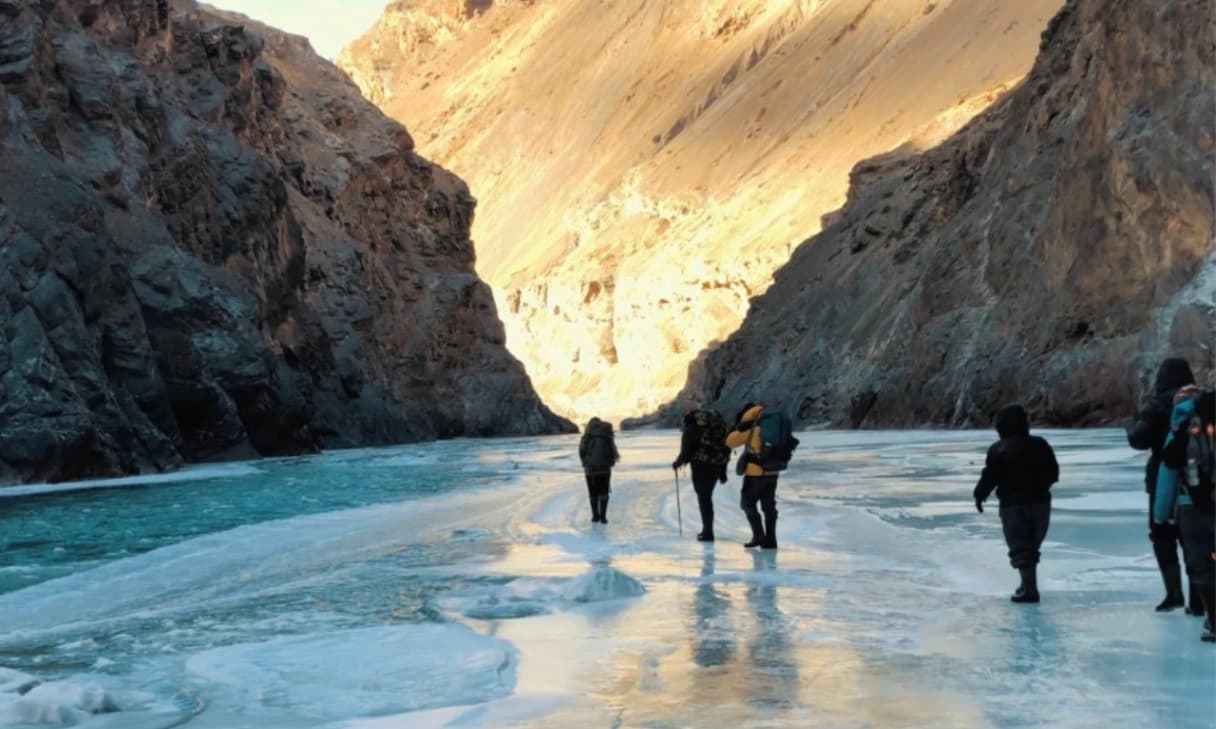
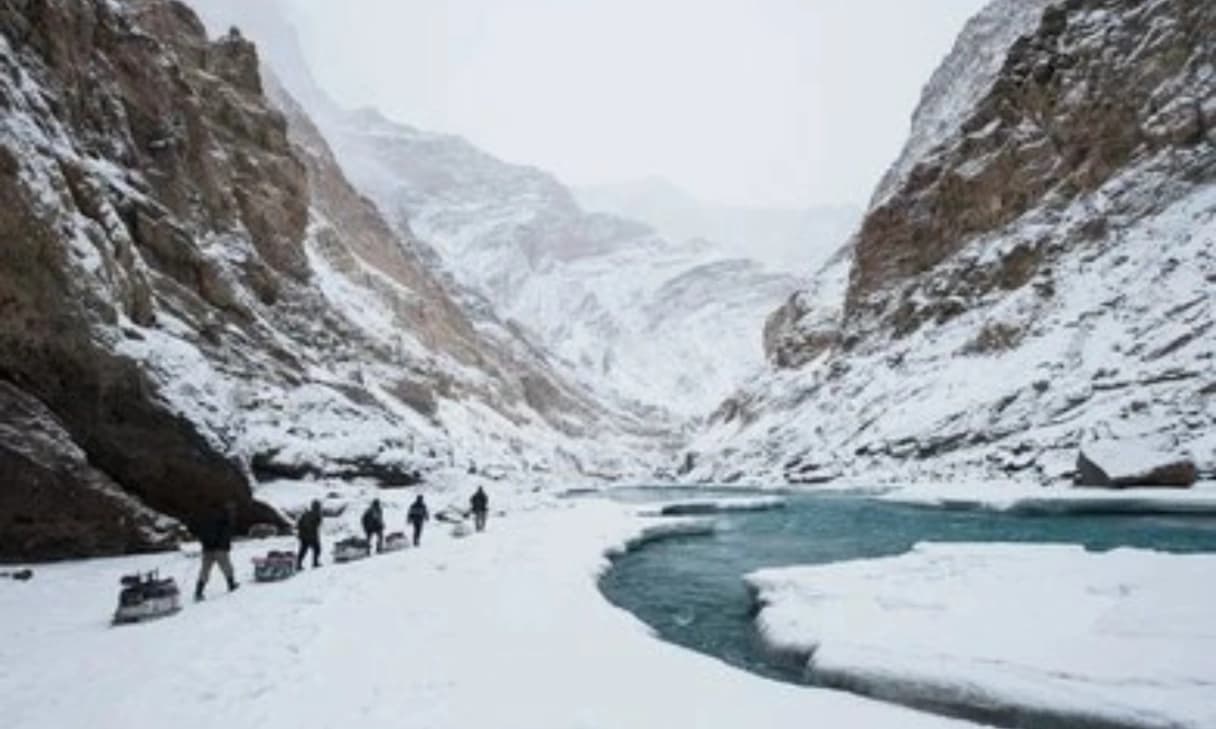
Chadar translates to blanket in Hindi, referring to the thick blanket of ice that forms over the Zanskar River during the harsh Ladakhi winters. When temperatures plummet between -30°C and -35°C, the fast-flowing river freezes, creating a shifting, translucent path of ice that weaves through deep gorges and towering vertical cliffs.
Historically, this frozen river trek Ladakh was not a recreational adventure but a survival necessity. For centuries, it served as the only trade route connecting the isolated Zanskar Valley to the capital city of Leh during winter. Locals used this perilous path to barter butter and yak cheese for copper, salt, and other essential goods. Today, while it remains a lifeline for Zanskaris, it has transformed into a bucket-list adventure for trekkers globally.
Walking on the Chadar is not just about endurance; it is an immersive lesson in adaptation. The trek takes you through a canyon that receives barely a few hours of direct sunlight a day, keeping the river frozen solid. It requires a specialized gait—often called the penguin walk—to navigate the slippery surface without crampons. It is a journey into a frozen glass world where the silence is only broken by the sound of the river gushing beneath the ice and the crunch of your boots.
Key Fact: The Zanskar River is a tributary of the mighty Indus River. The trek usually covers a distance of approximately 65 km (return trip) over 8 to 9 days, depending on the itinerary and ice conditions.
Why Chadar Trek Is Unique (Why Choose This Trek)
The Chadar Trek stands in a league of its own. It offers an experience that no other Himalayan trek can match. While most winter treks involve trudging through deep snow on mountain slopes, Chadar keeps you on the valley floor, walking directly on a river bed.
Here is why this trek is unlike any other:
- The Penguin Walk Experience: Walking on ice is a skill in itself. You don't lift your feet; you slide them. Mastering this friction-based movement is part of the fun and challenge.
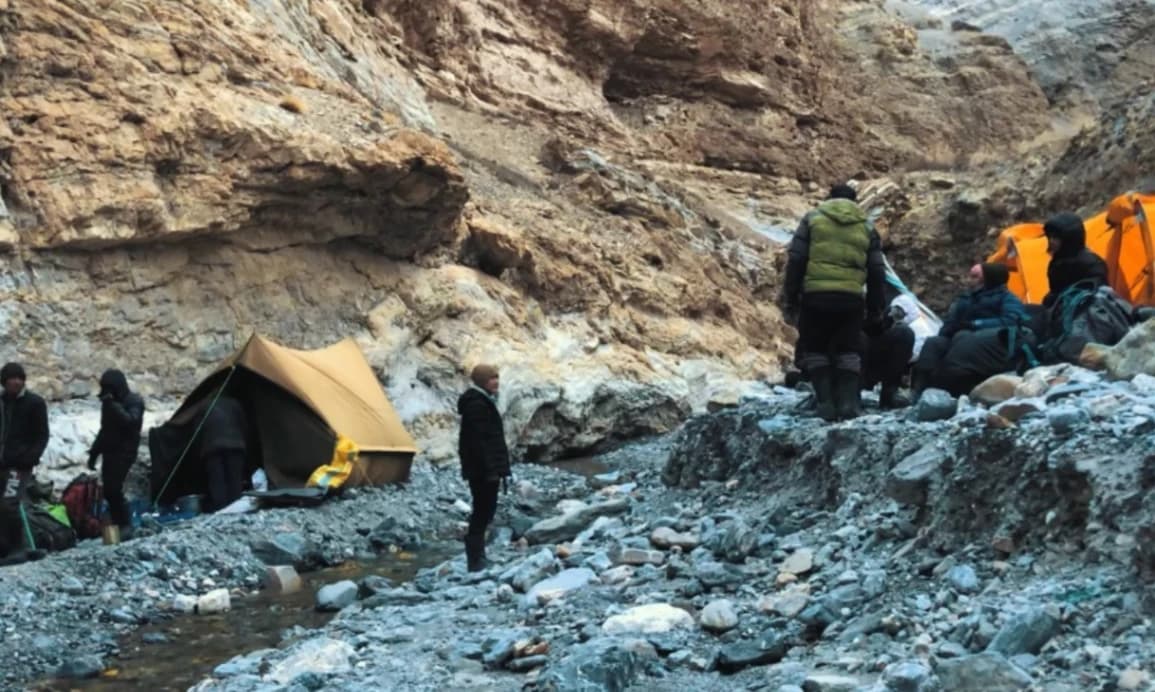
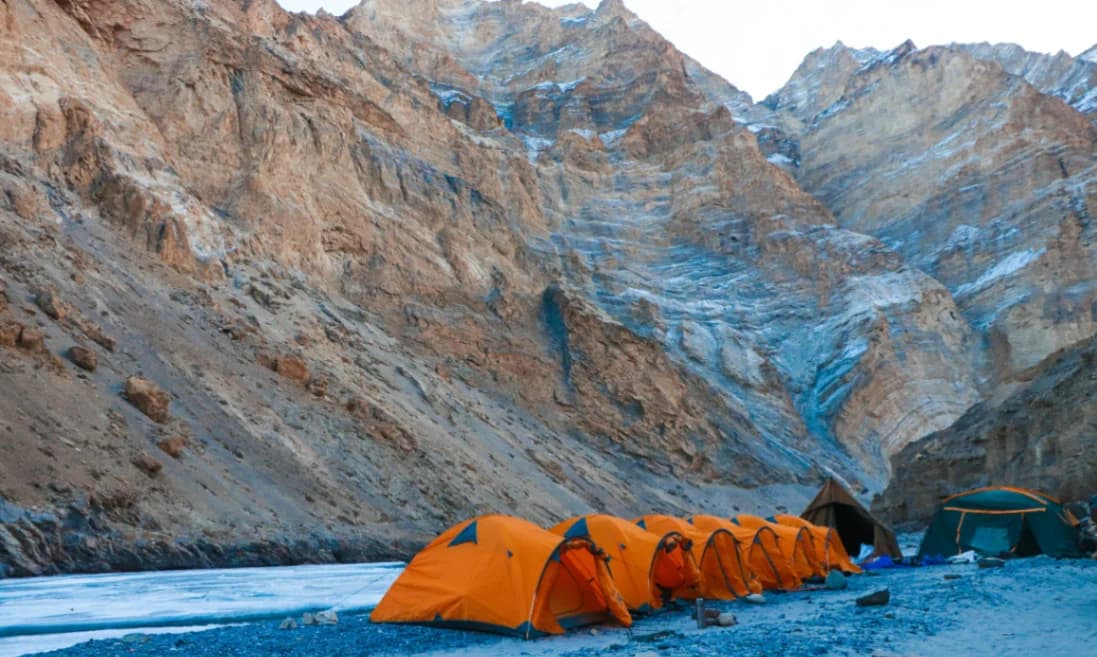
- Living in a Deep Freeze: This is one of the few treks where you experience sustained sub-zero temperatures 24/7. It tests your mental resilience as much as your physical stamina. Seeing your breath turn to frost instantly and sleeping in tents on river banks at -25°C is a badge of honor for any adventurer.
- The Landscape of Narnia: The scenery is surreal. You walk through a gorge with vertical rock faces rising 600 meters on both sides. Along the way, you witness frozen waterfalls suspended in time—water that was caught mid-fall by the freezing cold.
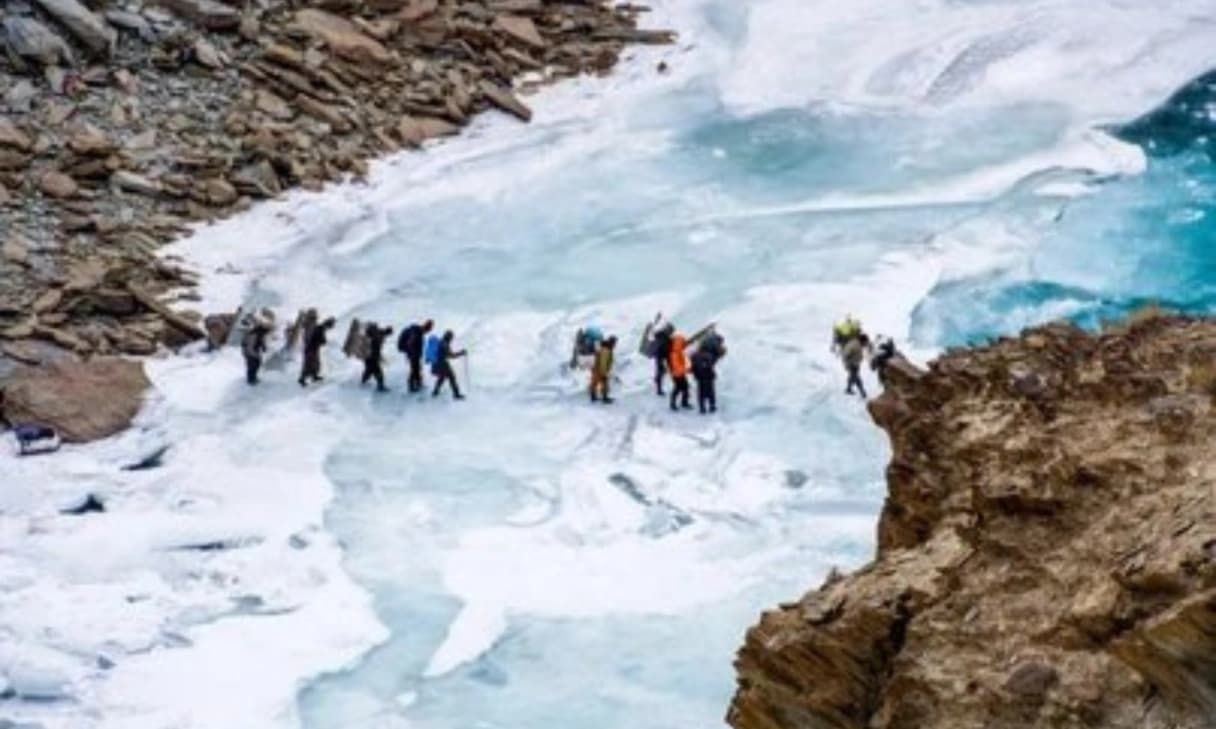
- Cultural Connection: You aren't just trekking; you are walking a living heritage route. You will likely share the ice with Zanskari locals—porters pulling sledges and children walking to school in Leh—giving you a glimpse into their incredible resilience.
- Dynamic Terrain: The trail changes every hour. The ice shifts, cracks, and reforms. In some sections, the ice might be too thin, forcing you to climb up the rocky banks (scrambling) to bypass the danger zone. No two days on the Chadar are ever the same.
Chadar Trek Route & Location Explained
The Chadar trek route is linear, following the course of the Zanskar River upstream and then retracing the same path back. The geography is dramatic—a narrow, winding gorge that cuts through the Zanskar range of the Greater Himalayas.
The Journey Breakdown:
- The Gateway (Leh to Shingra Koma/Tilat Sumdo): The adventure begins with a scenic drive from Leh (3,500m) to the starting point. Depending on road conditions and ice formation, the trek usually starts at Shingra Koma or Tilat Sumdo. This drive takes you past the confluence of the Indus and Zanskar rivers at Nimmu, where you can visually see the river turning into ice.
- Camp 1: Shingra Koma/Tilat Sumdo: This is usually the first campsite. It allows trekkers to get their ice legs and adjust to the falling temperatures.
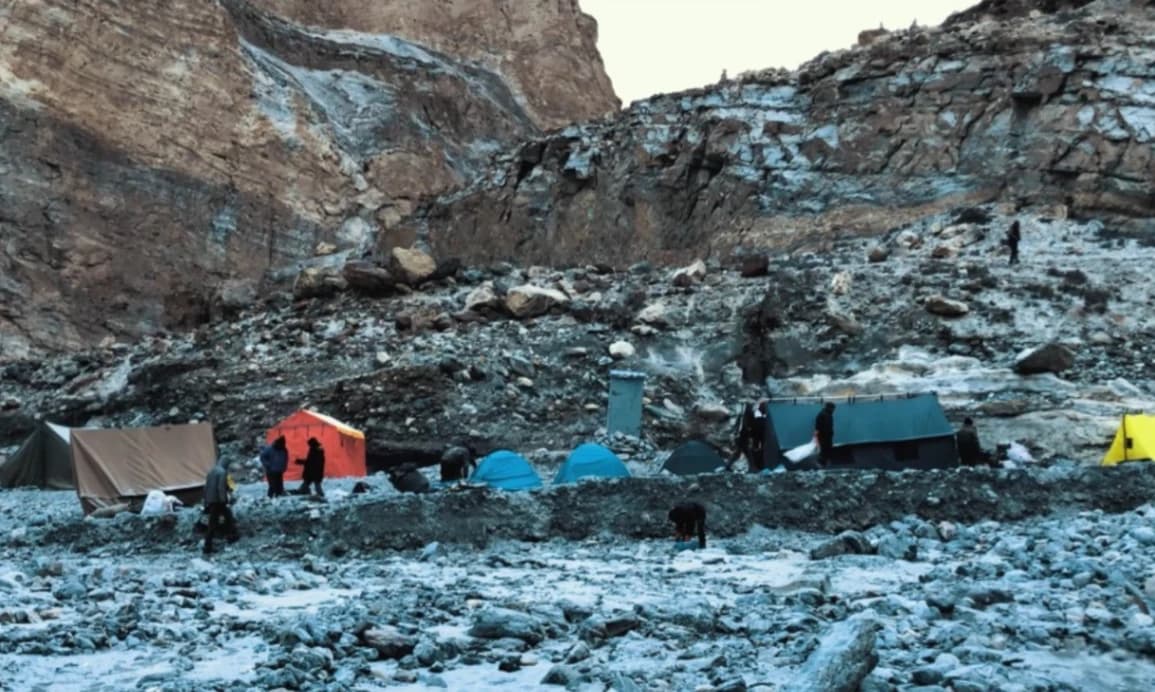
- Camp 2: Tibb Cave: A crucial stop on the route. Tibb Cave is a large natural shelter often used by porters. The walls here are blackened by decades of soot from campfires lit by locals seeking warmth. The stretch to Tibb is famous for its stunning rock formations and reduced sunlight, which keeps the temperature extremely low.
- The Turnaround Point: Nerak Waterfall: The crown jewel of the trek. Nerak is a small village high up in the mountains, but trekkers camp near the river base to witness the Nerak Frozen Waterfall. This massive 50-foot waterfall is completely frozen into a sculpture of blue ice. It serves as the standard turnaround point for most itineraries.
- The Return: You retrace your steps back to the start. However, the return journey often feels like a completely new trek because the ice transforms constantly. A section that was solid ice two days ago might now be a pool of slush, forcing you to find a new path.
Best Time to Do the Chadar Trek
Timing is critical for safety. The window for the best time for Chadar Trek is incredibly narrow—lasting only about 4 to 5 weeks annually.
The Golden Window: Mid-January to Mid-February
- Why this window? This is the peak of winter in Ladakh. The cumulative cold of December and early January ensures the ice sheet (the Chadar) is thickest and most stable.
- Early January (High Risk): The ice is often still forming. It may be thin or slushy, leading to higher risks of breaking through into the freezing water.
- Late February (Melting Risk): As the sun starts getting stronger, the ice begins to recede. The Chadar breaks apart, making the route impassable.
Weather Conditions:
During this window, expect clear, crisp days with intense sunshine (when it penetrates the gorge) and biting cold.
- Daytime Temps: -10°C to -15°C
- Nighttime Temps: -25°C to -30°C (can drop to -35°C at Nerak)
A Note on Climate Change:
In recent years, global warming has made the ice formation less predictable. It is essential to check with local operators about the current status of the river before booking, as the season sometimes shrinks by a week or two.
Here is the Planning & Reality Check content section, designed to guide users from awareness to the decision-making phase. It addresses the practical realities of the trek to help them assess their readiness.
Chadar Trek Difficulty Level (Honest Explanation)
A common misconception is that because the Chadar Trek difficulty does not involve steep climbing, it is easy. This is false. While it is true that the trail is mostly flat (you are walking on a river, after all), the challenge lies in the environment, not the elevation gain.
The Difficult Aspects:
- Slippery Terrain: You are walking on ice for 6-8 hours a day. It requires constant focus. One wrong step can lead to a hard fall or, worse, slipping into freezing water. The mental fatigue of constantly watching your step is higher than on a regular dirt trail.
- The Bitter Cold: This is the hardest part. The temperature never goes above freezing. Simple tasks like tying shoelaces, zipping up a jacket, or getting out of a sleeping bag become momentous efforts at -25°C.
- Adaptability: The route is unpredictable. If the ice breaks, you may have to scramble up rocky cliffs to bypass the water. This requires brief but intense bursts of physical effort.
The Easier Aspects:
- No Cardio Strain: unlike trekking to Everest Base Camp or Kilimanjaro, you aren't fighting gravity. Your heart rate remains relatively stable, which means you are less likely to suffer from exhaustion due to exertion.
- Altitude is Manageable: Since you are walking on the valley floor (approx 3,400m - 3,700m), the altitude gain is negligible compared to summit treks. If you handle the first 3 days in Leh well, AMS (Acute Mountain Sickness) is less of a risk on the trail itself.
- Verdict: It is a Moderate to Difficult trek. It is accessible to beginners, but only those with strong mental resilience and preparation for extreme cold.